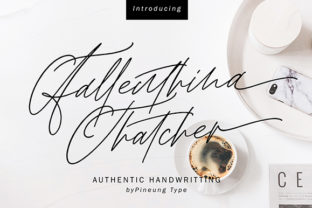
Fallenthina Thatcher: A Handwritten Font That Feels Human—Without Losing Impact
Imagine opening an invitation and feeling the warmth of a personal note—not because someone wrote it by hand, but because the typeface itself carries that sincerity. That’s Fallenthina Thatcher in action: a uniquely stunning handwritten font with a bold twist. It doesn’t just mimic handwriting—it breathes personality, confidence, and approachability all at once.
What Makes Fallenthina Thatcher Stand Out (Beyond “Handwritten”)
Most handwritten fonts fall into one of two camps: delicate and fragile, or energetic and chaotic. Fallenthina Thatcher lives confidently in the middle. Its letterforms are fluid and natural—slightly uneven, with organic stroke variation—but anchored by strong contrast and intentional weight shifts. The “bold twist” isn’t about thickness alone; it’s how the downstrokes hold presence while upstrokes retain lightness, giving text rhythm and readability—even at smaller sizes.
Unlike script fonts that demand tight spacing or formal contexts, Fallenthina Thatcher works well with generous letter-spacing and even modest tracking adjustments. It’s not fussy. It’s expressive, yes—but also reliable when you need it to carry real messaging.
Small Business Branding That Feels Like a Conversation
Think of a local ceramicist launching her first online shop. She wants her site to reflect her hands-on process—not sterile perfection, but care, craft, and quiet confidence. Using Fallenthina Thatcher for her logo lockup or hero headline instantly signals authenticity. Paired with clean sans-serif body text, it creates visual harmony: warm but not cutesy, personal but not unprofessional.
Or consider a boutique wellness studio offering yoga and nutrition coaching. Their email newsletter subject lines in Fallenthina Thatcher (“You’ve Got This Week’s Reset Ready”) land differently than standard fonts—they feel like encouragement from a trusted friend, not a broadcast.
Wedding & Event Design With Emotional Resonance
Couples increasingly seek stationery that reflects *their* voice—not a generic “elegant” template. Fallenthina Thatcher shines on save-the-dates, menus, and signage where tone matters as much as information. A rustic-chic wedding might use it for table numbers alongside linen textures; a modern minimalist celebration could pair it with thin black type for ceremony programs—letting the font’s subtle boldness add soul without clutter.
Real observation: designers report clients consistently say things like, “It looks like *us* wrote this”—even though it’s digital. That emotional shorthand saves time in revisions and builds stronger client trust.
Digital Products Where Personality Drives Engagement
Apps, SaaS dashboards, and online courses often default to ultra-neutral typography. But small moments of human texture can ease cognitive load. A learning platform teaching creative writing uses Fallenthina Thatcher for motivational prompts (“Your next sentence is waiting”)—not for body copy, but as gentle, recurring nudges. Users report feeling more supported, less instructed.
Similarly, subscription boxes (think gourmet coffee or indie skincare) use it sparingly on packing slips or digital receipts. That one line—“Thanks for letting us be part of your morning ritual”—feels handwritten, even when it’s not. It transforms transactional touchpoints into relational ones.
Who Benefits Most—and How They Use It Differently
- Freelance designers reach for Fallenthina Thatcher when clients say, “Make it feel special, but not childish.” They layer it over muted photography or use it in animated social posts—where its natural flow translates beautifully into motion.
- Content creators (especially in lifestyle, parenting, or faith-based niches) apply it to quote graphics and Instagram Stories. Its bold-yet-soft contrast holds up against busy backgrounds without needing heavy outlines or shadows.
- Educators and coaches embed it into printable worksheets or PDF workbooks—not for dense text, but for section headers, reflection prompts, or affirmations. The font subtly reinforces the idea that growth is personal, not prescriptive.
Practical Considerations Before You Apply It
Fallenthina Thatcher thrives when used intentionally—not ubiquitously. Here’s what seasoned users keep in mind:
- Legibility at small sizes: It’s highly readable down to ~18px in headings, but avoid using it under 14px—even for captions. For fine print, always pair with a clear, neutral sans-serif.
- Language support: The standard version covers basic Latin characters (English, Spanish, French, German, etc.). If your project includes extended diacritics or non-Latin scripts, verify coverage before licensing.
- Spacing is part of the design: Its built-in kerning is thoughtful, but don’t assume auto-spacing works everywhere. Test headlines across devices—especially mobile—where tighter viewports can compress rhythm. A quick manual adjustment in design software often makes the difference between “charming” and “crowded.”
- Licensing clarity: Fallenthina Thatcher is typically licensed per use case (web, desktop, app). If you’re embedding it in a client’s WordPress theme or a white-labeled tool, confirm the license tier covers that scope. Unexpected usage limits are the most common hiccup.
Strengths That Solve Real Problems
Its biggest strength isn’t aesthetic—it’s emotional efficiency. In a world saturated with AI-generated content and algorithm-driven design, Fallenthina Thatcher offers a shortcut to warmth. You don’t need to write longer copy or add extra illustrations to convey care—you just choose the right font, and the tone lifts.
It also bridges generational perception gaps. Older audiences read it as sincere and crafted; younger audiences read it as intentional and anti-generic. That rare dual resonance makes it especially valuable for brands serving wide age ranges—like community centers, multigenerational family businesses, or health clinics.
A Note on When to Pause and Reflect
Fallenthina Thatcher isn’t ideal for every context—and that’s part of its integrity. Avoid it for legal disclaimers, technical documentation, or interfaces requiring rapid scanning (like transit apps or medical dashboards). Its charm comes from pause, not speed. Likewise, if your brand voice leans sharply corporate, futuristic, or high-tech, this font may soften your message more than intended.
And while its boldness adds presence, overusing it—say, across full paragraphs or multiple layered elements—can dilute its impact. Think of it like a favorite spice: essential in the right moment, overwhelming if sprinkled everywhere.
Final Thought: It’s Not Just Typography—It’s Tone Infrastructure
Fallenthina Thatcher does more than look good. It quietly supports how people feel when they encounter your work. Whether it’s a parent scrolling a school newsletter, a bride reviewing her invitation suite, or a founder launching their first product—the font helps them sense intention behind the interface. That kind of resonance doesn’t come from features or specs. It comes from knowing exactly when, where, and why a human touch matters most.