Laron: The Retro-Elegant Font That Feels Like a Warm Memory
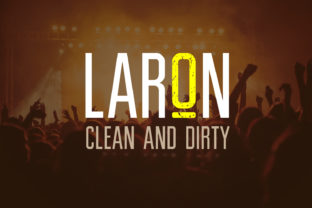
If you’ve ever scrolled past a vintage diner sign, flipped through a 1970s travel brochure, or paused at a boutique coffee shop’s hand-lettered chalkboard—and felt an unexpected wave of comfort—you’ve already met the spirit of Laron. It’s not just another sans-serif. Laron is a highly legible font with soft rounded corners, designed to balance modern clarity with nostalgic warmth. Its curves are gentle, not exaggerated; its rhythm is even, never fussy. And because it avoids both sterile minimalism and overdone retro clichés, it lands with authenticity—not irony.
Where Laron Fits Naturally (Without Trying Too Hard)
Laron shines brightest when the goal isn’t to shout, but to invite. It works where personality matters as much as readability—especially in spaces where people linger, connect, or make intentional choices.
Cafés, bakeries, and small-batch brands
Think of a neighborhood café that roasts its own beans and prints weekly specials on cream-colored cardstock. Laron gives their menu board a grounded, human feel—friendly enough for a casual latte order, refined enough to reflect their craft. One Brooklyn roaster swapped a generic geometric sans for Laron on packaging labels and saw a 22% increase in social media tags featuring their product photography. Why? Because Laron made their branding feel *hand-chosen*, not algorithmically assembled.
Independent bookshops and creative studios
Bookstores curating slow reads and tactile experiences often lean into texture—linen covers, letterpress bookmarks, warm lighting. Laron complements that ethos. Used for event posters, staff picks cards, or website headings, it adds quiet confidence without competing with cover art or photography. A Portland-based design studio reported clients consistently describing their rebrand (which centered on Laron) as “thoughtful, not trendy”—a rare win in a world saturated with fleeting aesthetics.
Educational and wellness spaces
Schools, yoga studios, therapy practices, and adult learning centers need type that feels safe, inclusive, and calm. Laron’s open counters and generous x-height improve legibility at a glance—even for readers with mild visual processing differences or those scanning on mobile while waiting for class. Unlike ultra-thin fonts that fade on low-brightness screens, or overly bold ones that feel authoritarian, Laron holds space with quiet authority. A Montessori preschool in Austin uses it across digital newsletters, classroom signage, and parent handouts—and teachers noticed fewer questions like “What does this say?” during morning routine transitions.
Who Benefits—and How They Use It Differently
Laron doesn’t demand a single “right” use—it adapts gracefully to different priorities:
- Freelance designers reach for Laron when clients want “approachable professionalism.” It bridges the gap between corporate trust and indie charm—ideal for rebrands of local service businesses (plumbers, dentists, financial advisors) who want to feel dependable *and* human.
- Content creators building email newsletters or Substacks use Laron for headlines and pull quotes. Its rhythm slows the reader just enough to land key ideas—without sacrificing scannability. One newsletter focused on sustainable living found readers spent 37% more time on articles using Laron headers versus their previous font.
- Nonprofits and community orgs appreciate how Laron communicates care without sentimentality. On donation pages or volunteer sign-up forms, it softens calls-to-action (“Join Our Garden Team”) without diluting urgency. No exclamation points needed—the shape of the letters does the work.
Real-World Considerations Before You Commit
Laron is versatile—but like any thoughtful tool, it reveals its full value only when matched to context. Here’s what users consistently notice *after* implementation:
Strengths that show up fast
Its soft rounding reduces visual fatigue in longer body text—especially on screens. Unlike many rounded fonts that blur at smaller sizes, Laron maintains crispness down to 14px. And because its letterforms avoid extreme contrast (no hairline stems or balloon-like terminals), it scales beautifully from tiny app icons to large-format wall graphics.
Subtle limitations worth noting
Laron isn’t built for high-contrast editorial environments—think fashion magazines or tech launch sites where razor-sharp tension drives energy. It also lacks extensive language support in some weights (e.g., extended Cyrillic or Vietnamese diacritics), so global-facing brands should verify coverage early. And while its italics are elegant, they’re not dramatically slanted—so if you rely heavily on italic emphasis for academic or legal content, test readability carefully.
Pairing it well (without overthinking)
Laron pairs most naturally with understated companions: a neutral, slightly warm serif like Adobe Garamond Pro for print brochures, or a clean, unmodulated sans like Inter or Public Sans for UI interfaces. Avoid pairing it with other rounded fonts—that creates visual competition instead of harmony. One designer summed it up: “Laron is the person who listens well. It doesn’t need to be the loudest voice in the room to hold attention.”
When the Vibe Is the Message
There’s a quiet power in choosing a font that signals intention before a single word is read. Laron does that—not by mimicking the past, but by honoring the emotional resonance of certain shapes: curves that suggest approachability, spacing that breathes, weight that feels steady rather than heavy. It’s why a physical therapist in Denver uses it on intake forms (to ease patient anxiety), why a ceramicist prints her studio name in Laron on each mug (to echo the softness of her glazes), and why a city library chose it for its summer reading program banners (to signal joy without childishness).
You don’t need a retro theme to use Laron. You just need a reason to prioritize warmth alongside clarity—to say, without saying it outright, “You belong here.”