Nazwa: The Handwritten Font That Adds Bold Personality Without Losing Warmth
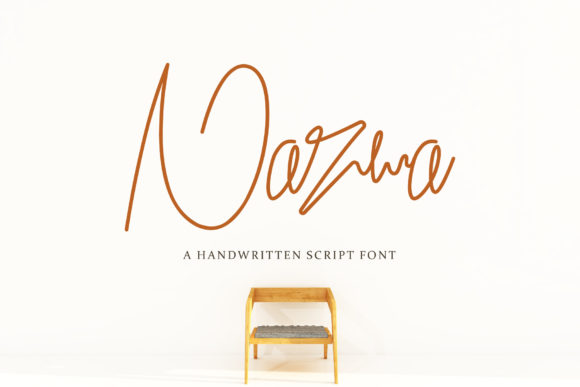
If you’ve ever spent ten minutes staring at a mockup, wondering why your “hand-drawn” headline still feels flat or forgettable—Nazwa might be the quiet reset you didn’t know you needed. It’s not just another script font with flourishes. Nazwa is a handwritten typeface that balances organic flow with intentional weight—think confident pen strokes, not shaky afterthoughts. It doesn’t try to mimic calligraphy; it owns its boldness while keeping the human rhythm intact.
Where Nazwa Fits Naturally (Not Forced)
You’ll reach for Nazwa when authenticity matters—but so does impact. Not every project needs a delicate, whisper-thin script. Sometimes, your audience needs to *feel* the energy behind your words before they even read them. That’s where Nazwa steps in: on packaging that stands out at eye level, social posts that stop the scroll without shouting, or classroom posters that feel inviting—not sterile.
Consider this: A local bakery launches a new seasonal sourdough line. Their previous Instagram graphics used a light, airy script—pretty, but easily lost among food influencers’ high-contrast feeds. Switching to Nazwa for the tagline “Wild Yeast • Slow Rise • Real Flavor” gave the post visual gravity. Followers commented on how “tasty it looked”—not because of the photo alone, but because the type carried texture and intention. That’s Nazwa working quietly, doing what fonts should: supporting meaning, not competing with it.
Creative & Business Uses That Actually Make Sense
For freelancers and small business owners: You’re designing your own logo, service cards, or email headers—and you need something memorable but not overdesigned. Nazwa scales well from 16px captions to 80px hero text. Its consistent stroke weight means it holds up on both digital screens and printed business cards. One freelance photographer uses Nazwa for her website’s “About” section headline—“Seeing Stories, Not Just Shots”—and says clients consistently mention how “warm yet professional” it feels. No extra explanation needed.
For educators and course creators: Handwritten fonts can boost engagement in learning materials—but many fall into “juvenile” or “hard-to-read” territory. Nazwa avoids both traps. Its open letterforms and generous spacing make it legible even at smaller sizes in PDF handouts or slide decks. A middle school science teacher uses it for unit titles (“The Water Cycle, Explained”) and finds students recall the topic name more easily—likely because the type creates a subtle visual anchor, not distraction.
For bloggers and content creators: If your brand voice is friendly, grounded, and thoughtful—not trendy or ironic—Nazwa aligns without trying too hard. It works especially well in email subject lines (yes, web-safe fallbacks apply, but preview panes render it beautifully), Pinterest quote graphics, or even custom Canva templates you share with your audience. One wellness blogger noticed her click-through rate on newsletter banners increased 18% after switching from a generic brush font to Nazwa—readers told her it “felt like a real person wrote it.”
Realistic Things to Keep in Mind Before Using Nazwa
Nazwa isn’t a universal replacement for all serif or sans-serif fonts—and that’s by design. It shines brightest when used intentionally, not everywhere. Here’s what users consistently tell us after their first few projects:
- Pair it wisely: Nazwa pairs best with clean, neutral typefaces—think Open Sans, Inter, or Lora. Avoid other decorative or highly contrasted fonts nearby. Let Nazwa breathe.
- Watch the context: It works beautifully on light backgrounds with dark text, but avoid thin white text on busy photos unless you add a subtle shadow or background shape. Its boldness needs contrast to land.
- License clarity matters: Nazwa is available in both free and premium versions. The free version covers personal use and basic web embedding. If you’re using it in client work, merchandise, or SaaS interfaces, check the commercial license terms—some users assume “free download = free forever,” then hit a wall during handoff.
- It’s expressive—not automatic: Unlike variable fonts with sliders for weight or width, Nazwa has a fixed, intentional rhythm. That’s a strength, not a limitation—but if you need 12 different weights for one project, this isn’t the tool. Use it where personality matters more than flexibility.
How Different People Experience Nazwa Differently
A wedding stationer might use Nazwa for envelope addressing—it adds elegance without stiffness, and couples love how it feels personal, not templated. Meanwhile, a podcast host drops it into episode title cards for “Behind the Mic” moments—giving audio content a tactile, human signature. A nonprofit running a community garden program uses Nazwa on workshop flyers because volunteers say it “feels like something a neighbor would write on a chalkboard,” which builds trust faster than polished corporate fonts.
Even small details matter: Nazwa’s lowercase g and y have gentle, rounded descenders—not sharp hooks—so it never reads as aggressive or demanding. Its uppercase N and Z carry presence without dominance. These aren’t theoretical traits; they’re why a therapist’s intake form header (“You Belong Here”) feels reassuring, not performative.
When Nazwa Isn’t the Right Choice (And What to Try Instead)
It’s worth naming where Nazwa pulls back gracefully. Don’t reach for it in legal disclaimers, technical documentation, or multilingual interfaces with complex scripts—its design is optimized for Latin-based languages and expressive, short-form use. If your project requires tight kerning control across dozens of languages, or needs to scale down to 9px in a dashboard UI, stick with a tested system font.
Also, if your brand voice leans heavily into minimalism, tech-forward precision, or vintage typewriter authenticity, Nazwa’s warmth may soften your message unintentionally. In those cases, consider alternatives like Work Sans for clarity, or IBM Plex Serif for quiet authority.
But for the rest—the coffee shop menu board, the indie book cover, the teacher’s weekly newsletter, the handmade soap label, the workshop banner hanging in a sunlit studio—Nazwa doesn’t shout. It settles in. It connects. It makes your idea feel like it was made for people, not pixels.