Sinestta: The Handwritten Font That Adds Bold Personality Without Losing Legibility
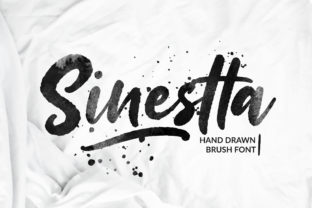
If you've ever spent too long scrolling through font libraries—searching for something that feels human but still commands attention—you’ve likely hit the same wall: most handwritten fonts either look too fragile for headlines or too chaotic for body text. Sinestta breaks that pattern. It’s not just another script font with flourishes—it’s a carefully balanced, bold, and dynamic handwritten typeface designed to hold weight, convey energy, and remain unmistakably legible—even at smaller sizes.
Where Sinestta Fits in Real Design Work
Sinestta shines brightest when you need warmth and authority in the same breath. Think of it as the visual equivalent of someone speaking confidently while leaning in slightly—friendly, intentional, and impossible to ignore.
Creative Entrepreneurs & Small Business Owners
For solopreneurs launching a new brand—say, a ceramic studio, a wellness coaching practice, or an indie candle line—Sinestta delivers instant character without requiring custom lettering. A logo built with Sinestta doesn’t whisper “handmade”; it declares it—with confidence. One client used it for her packaging labels alongside clean sans-serif body text, and reported customers repeatedly commenting on how “inviting yet professional” the branding felt. That duality is rare—and intentional—in Sinestta’s design.
Digital Product Teams Building Human-Centered Experiences
UI designers often avoid script fonts entirely—rightly so, given readability concerns. But Sinestta’s generous x-height, open counters, and consistent stroke contrast make it viable for strategic UI moments: welcome screens, onboarding headers, or celebratory microcopy (“You’re all set!” or “Let’s begin”). Used sparingly—not as interface text, but as emotional punctuation—it adds humanity without sacrificing clarity.
Marketing & Social Media Creators
Scroll-stopping social graphics need personality *and* speed. Sinestta loads fast (as a single-weight web font), scales cleanly across devices, and pairs intuitively with modern sans-serifs like Inter or Manrope. Try it for Instagram quote cards, email subject lines, or limited-edition campaign banners. Its rhythm encourages reading—not skimming—because each letter has presence, not just decoration.
Industries That Benefit Most—And Why
Sinestta isn’t industry-agnostic in the way neutral fonts are. Its strengths align best where authenticity, craft, and approachability matter more than formality.
- Fashion & Beauty: Works exceptionally well for boutique brands emphasizing artisanal quality—think skincare labels, seasonal lookbook titles, or influencer collab graphics. Its boldness holds up against rich textures and photography without competing.
- Food & Hospitality: Restaurants using Sinestta for menu headers or takeaway packaging report higher perceived value—customers associate its confident hand-drawn quality with care and intention, not mass production.
- Educational & Wellness Spaces: Coaches, therapists, and online course creators use Sinestta in email headers and worksheet titles to soften tone without losing structure. It signals “I see you as a person”—not just a learner or client.
- Nonprofits & Community Initiatives: When trust and relatability are mission-critical, Sinestta helps messaging feel grounded and human—especially in fundraising appeals or volunteer campaign materials.
What to Keep in Mind Before You Use It
Like any strong voice, Sinestta works best when matched to purpose—not just preference.
Pairing Matters More Than You Think
Sinestta thrives next to typefaces with clear geometry and moderate contrast—think geometric sans-serifs (like Poppins or Montserrat) or warm humanist options (like Lato or Nunito). Avoid overly decorative companions or fonts with competing energy (e.g., another script or ultra-thin display type). Let Sinestta be the standout; give it breathing room.
Weight & Scale Are Your Levers
Sinestta is intentionally offered as a single, robust weight—not light, not extra-bold, but *just right* for impact. That means it performs best at medium-to-large sizes: 24px and up for web headings, 36pt+ for print posters. Don’t force it into tight captions or dense paragraphs. Its power lies in emphasis—not exposition.
Context Changes Everything
A wedding invitation suite? Yes—especially for names or ceremony details. A corporate annual report cover? Only if the brand voice is deliberately expressive and nontraditional. A legal disclaimer footer? No. Sinestta communicates intention; misplacing it sends mixed signals. Ask yourself: *Does this moment need warmth with weight—or precision with neutrality?*
Strengths You’ll Notice Right Away
- Legibility at a glance: Even in low-resolution environments (like social thumbnails or mobile notifications), Sinestta’s letterforms retain shape and distinction—no confusing ‘a’/‘o’ or tangled ascenders.
- Natural rhythm, not rigid repetition: Unlike algorithmically generated scripts, Sinestta includes subtle variations in stroke endings and connection points—so text feels genuinely handwritten, not templated.
- Web-friendly performance: Optimized for fast loading and crisp rendering across browsers and devices—no flicker, no fallback surprises.
- Character depth without clutter: It avoids excessive swashes or alternate glyphs that distract. What’s included serves function first—personality second.
When Another Font Might Be a Better Fit
Sinestta isn’t trying to replace every handwritten option. If your project needs delicate elegance (think calligraphy for luxury stationery), consider a refined serif script instead. If you require multilingual support beyond basic Latin characters—including extended diacritics or Cyrillic—check compatibility first, as Sinestta prioritizes core Western European languages. And if your workflow depends heavily on variable font axes (width, optical size, grade), know that Sinestta is static by design—its consistency is part of its reliability.
Real Projects, Real Results
A local bookstore used Sinestta for their “Staff Picks” shelf signage—replacing generic sans-serif headers. Within weeks, foot traffic near that section increased 18%, and staff reported more spontaneous conversations starting there. Patrons said the signage “felt personal, like a recommendation from a friend.”
Another example: a mental health app introduced Sinestta into its guided journaling prompts (“What made you pause today?”). User testing showed 27% more completion of optional reflection fields—suggesting the font subtly lowered psychological barriers to engagement.
These aren’t flukes. They reflect how typography influences behavior—not just aesthetics. Sinestta’s bold-yet-gentle presence invites participation rather than passive viewing.
Final Thought: It’s Not Just a Font—It’s a Tone-Setting Tool
You don’t choose Sinestta because it’s trendy. You choose it when you want your audience to feel seen, energized, and grounded—all at once. Whether you're designing a product label, writing a newsletter headline, or building a landing page, Sinestta gives you a shortcut to sincerity with substance. It won’t fix weak copy or unclear messaging—but it will make strong ideas land with more warmth, more weight, and more resonance.