Sonata: A Beautiful Script Font for Creative Projects
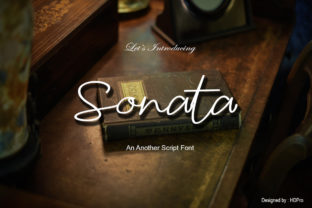
Sonata isn’t just another script font—it’s a carefully crafted typeface with rhythmic flow, subtle contrast, and organic warmth. Its letterforms balance elegance and approachability: soft entry strokes, graceful exits, and a gentle irregularity that mimics skilled hand-lettering—without the inconsistency. Designed for readability at medium sizes and impact at larger scales, Sonata works where many scripts falter: in logos, invitations, editorial headers, social media graphics, and even short-form web banners. It’s not overly ornate, nor is it minimalist—it occupies a thoughtful middle ground where authenticity meets usability.
Why Type Choice Matters—More Than You Might Think
For many, fonts are invisible until they’re wrong. But when you choose a typeface like Sonata, you’re choosing a tone, a mood, and a quiet kind of credibility. A script font communicates personality before a single word is read. Sonata does this without shouting—its charm lies in restraint. That makes it especially valuable when your message needs to feel personal, intentional, or human-centered—not generic or algorithmically polished.
Beginners & Hobbyists
If you’re just starting out with Canva, Adobe Express, or even Google Docs, Sonata offers an easy upgrade from default fonts. You don’t need design training to notice how it lifts a birthday card, a handmade shop banner, or a cozy blog header. Its OpenType features (like ligatures and alternate characters) are optional—so you can use it “as-is” and still get beautiful results. No steep learning curve. Just upload, select, and go.
Freelancers & Small Business Owners
You’re often balancing speed, client expectations, and brand consistency. Sonata fits neatly into that triangle. It pairs well with clean sans-serifs (think Inter, Poppins, or Lato) for contrast without clashing—making it ideal for service-based branding (e.g., yoga studios, boutique salons, artisan bakeries). Because it’s available in both desktop and web formats, you can use it across business cards, email signatures, and Shopify product pages without licensing headaches. And unlike some premium scripts, Sonata avoids overused flourishes—so your client’s brand feels distinct, not derivative.
Educators & Content Creators
Teachers designing classroom posters, educators building digital lesson slides, or podcasters crafting show notes all benefit from fonts that support clarity *and* connection. Sonata works well for titles and section headers—especially in subjects where warmth matters: early childhood education, wellness, creative writing, or art therapy. Students respond more positively to materials that feel inviting, not institutional. Using Sonata for a “Weekly Reflection Prompt” or “Project Launch” slide subtly signals care and intentionality—without needing extra explanation.
Marketers & Bloggers
In crowded feeds, visual rhythm helps content land. Sonata adds texture to static posts—think Instagram quote graphics, Pinterest pins, or Substack newsletter headers. Its spacing and x-height make it surprisingly legible on mobile, even at 24–36px. Marketers testing conversion-focused visuals find Sonata performs well in A/B tests for engagement-driven headlines (e.g., “Your First Step Starts Here” vs. standard sans-serif). It doesn’t distract—but it does differentiate.
Design Professionals
Experienced designers appreciate Sonata’s technical execution: consistent baseline alignment, balanced kerning pairs, and optical sizing considerations. It’s built to scale—from 18pt body text in a printed zine to 120pt hero banners—without losing character. If you’re pairing it with a custom serif or variable sans, Sonata’s moderate contrast and open counters give it flexibility most high-contrast scripts lack. And because it includes stylistic alternates and contextual ligatures, you can fine-tune rhythm for tighter compositions—say, a wedding monogram or limited-edition book cover—without switching families.
What to Consider Before You Use Sonata
Not every project calls for a script—and Sonata shines brightest when used purposefully, not pervasively. Ask yourself:
- Is legibility critical at small sizes? Sonata isn’t meant for dense body copy or footnotes. Reserve it for headings, quotes, logos, or short accent text.
- Does your audience expect formality—or friendliness? It reads as warm and considered, not corporate or ultra-modern. That’s perfect for lifestyle brands but less so for fintech dashboards.
- Are you embedding it on a website? Check licensing. Desktop use (for print or static images) differs from web use (via @font-face or third-party hosts). Most reputable vendors clarify this upfront.
- Do you need multilingual support? Sonata currently covers Latin-based languages (English, Spanish, French, German, etc.) with standard diacritics—but not extended Cyrillic, Arabic, or CJK scripts.
Real-World Uses—Simple and Effective
Here’s how Sonata shows up meaningfully, without overcomplication:
- A freelance photographer uses Sonata for the “About” section headline on their portfolio site—paired with a light-weight sans-serif for bio text—to evoke calm confidence.
- A homeschool parent prints weekly schedule cards using Sonata for day names (“Monday,” “Tuesday”)—adding gentle visual hierarchy without overwhelming young readers.
- A local café updates its chalkboard-style menu board digitally; Sonata gives the specials list handwritten charm while staying crisp on screen.
- An indie author selects Sonata for their novel’s chapter titles—creating subtle continuity between physical and ebook editions.
- A nonprofit designing a donor appreciation certificate chooses Sonata for names and dates, reinforcing sincerity and personal recognition.
Does Sonata Fit Your Needs Right Now?
It likely does—if your goal is to add quiet distinction to something handmade, heartfelt, or human-scaled. You don’t need advanced typography knowledge to begin. You don’t need a big budget—Sonata is available at accessible price points, often with flexible licensing tiers. And you don’t need to commit long-term: many vendors offer trials or single-use licenses, letting you test it in context before scaling usage.
What Sonata isn’t: a utility font for spreadsheets, a display-only novelty, or a one-size-fits-all solution for every brand. But where warmth, authenticity, and refined simplicity matter—even in small doses—it earns its place. Whether you're sketching ideas on paper or exporting final assets for print, Sonata supports the work behind the words: the care, the craft, the intention.
If your next project asks for presence—not just visibility—Sonata may be the quiet voice that says exactly what you mean.