Selectric Artisan
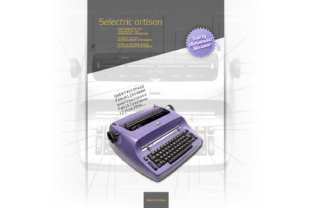
There’s a quiet resurgence happening in visual communication—one measured not in pixels per inch, but in the subtle imperfections of ink on paper, the rhythm of mechanical keystrokes, and the unmistakable presence of a typewriter’s voice. Selectric Artisan is more than a font; it’s a carefully calibrated bridge between analog warmth and digital precision. As a sans serif typewriter-themed typeface, it captures the clean geometry of mid-century design while preserving the tactile authenticity of the IBM Selectric—a machine that redefined office typography in the 1960s. Unlike distressed or overly ornamental retro fonts, Selectric Artisan avoids caricature. Its letterforms are evenly spaced, legible at small sizes, and engineered for real-world use—not just nostalgia.
Why Typewriter Aesthetics Are Resonating—Again
This isn’t about longing for carbon copies or correction ribbons. It’s about responding to deeper shifts in how we consume and create content. In an era saturated with hyper-polished, algorithmically optimized visuals—think endlessly smooth gradients, AI-generated stock imagery, and frictionless UIs—audiences are subconsciously gravitating toward cues of human intention. A slight variation in stroke weight, a hint of mechanical consistency (not robotic perfection), and restrained asymmetry signal craft over automation. Selectric Artisan delivers that signal without sacrificing clarity or versatility.
Consider how email newsletters, indie publishing platforms, and even SaaS dashboards now incorporate typewriter-inspired elements—not as gimmicks, but as tonal anchors. A headline set in Selectric Artisan conveys approachability and groundedness. A product label using it suggests care in curation, not mass production. That resonance isn’t accidental. It reflects a broader recalibration: people increasingly value transparency, process, and restraint—qualities that a well-designed typewriter font can quietly reinforce.
From Niche Tool to Cross-Industry Asset
Selectric Artisan didn’t emerge in isolation. It arrived alongside tangible changes in creative workflows and business priorities. Freelance designers no longer build entire brand systems from scratch for every client—they curate and adapt. Educators creating handouts or course materials need fonts that feel personal yet professional. Small business owners launching a new line of artisanal goods want packaging that communicates integrity without shouting. In each case, Selectric Artisan functions as a reliable, expressive tool—not a stylistic flourish, but a functional choice.
For example, a local coffee roaster might use Selectric Artisan for batch labels and tasting notes. Its clean sans serif structure ensures legibility on small stickers, while its typewriter lineage subtly reinforces values like craftsmanship and tradition. Similarly, a UX writer drafting microcopy for a note-taking app could apply Selectric Artisan to onboarding tips or empty-state messages—creating a gentle, human-scaled contrast to the interface’s default system font. These aren’t edge cases; they’re everyday applications where tone matters as much as typography.
How It Fits Into Modern Design Realities
Design tools have evolved dramatically—but so have expectations around speed, consistency, and accessibility. Selectric Artisan was built with these realities in mind. It includes full Latin character sets, OpenType features like true small caps and discretionary ligatures, and robust hinting for screen use. That means it works reliably across Figma, Adobe Creative Cloud, and web environments—not just in print mockups. No manual kerning adjustments needed for body copy. No surprise rendering glitches on mobile devices.
It also aligns with current accessibility best practices. Its x-height is generous, counters are open, and stroke contrast remains moderate—avoiding the thin hairlines or tight spacing that compromise readability for dyslexic readers or those viewing on lower-resolution screens. This practicality separates it from many “vintage” fonts that prioritize aesthetic homage over inclusive function.
What’s Changed Since the First Typewriter Fonts?
Early digital typewriter fonts often leaned into noise: heavy texture overlays, uneven baselines, exaggerated wear. They were fun, but rarely functional beyond one-off posters or social media graphics. Selectric Artisan represents a maturation of that genre—one rooted in typographic discipline rather than surface-level imitation. It doesn’t simulate paper grain or ink bleed. Instead, it interprets the Selectric’s engineering logic: the fixed-width impression mechanism, the crisp terminal cuts, the balanced proportions of its iconic typeball.
This shift mirrors larger trends in design thinking. We’ve moved past applying retro filters to everything and started asking sharper questions: What did that era *value*? How did its constraints shape its solutions? What principles still hold up? Selectric Artisan answers by honoring proportion, rhythm, and restraint—principles that transcend decades.
Practical Integration Tips for Real Projects
Using Selectric Artisan effectively isn’t about slapping it onto every heading. It’s about strategic contrast and contextual harmony. Here’s what works:
- Pair it intentionally: Combine it with a neutral, highly legible sans serif (like Inter, Helvetica Now, or even system fonts) for body text. Let Selectric Artisan carry voice—headlines, pull quotes, call-to-action buttons—while your secondary font handles sustained reading.
- Respect hierarchy: Its strength lies in medium to large sizes. Avoid using it below 14px for body copy—even with its optimized hinting, it’s designed to breathe. Reserve smaller sizes for captions or footnotes where its character adds nuance, not strain.
- Test in context: Try it in your actual delivery environment—email clients, CMS previews, printed proofs—not just design software. Its performance in dark mode, on textured paper, or embedded in SVG icons may differ subtly from screen mockups.
- Use weight deliberately: The Regular and Bold weights are distinct but harmonious. Avoid Light or ExtraBold variants unless you’ve validated their impact across your audience’s devices. Consistency trumps variety here.
Looking Ahead—Without Overpromising
Will Selectric Artisan replace system fonts in operating systems? No. Will it become the default for every startup’s branding? Unlikely—and that’s part of its strength. Its relevance grows not from ubiquity, but from intentionality. As AI accelerates visual production, the demand for human-centered differentiation will only increase. Tools like Selectric Artisan won’t solve that challenge alone—but they offer a thoughtful, grounded option when authenticity needs to be legible, not just declared.
That’s especially valuable for professionals who juggle multiple roles: the educator designing curriculum materials, the marketer building a newsletter series, the developer customizing a dashboard’s typography. They don’t need another complex plugin or licensing maze. They need a font that works—immediately, respectfully, and with quiet confidence. Selectric Artisan meets that need without fanfare.
A Note on Sustainability—Beyond Pixels
Typography has environmental implications, too. Selectric Artisan’s efficient file size (under 80KB for the full family) reduces page weight and bandwidth use—especially meaningful for global audiences on slower connections or data-limited plans. Its design also encourages concise, scannable communication. When headlines and subheads are clear and purposeful, users spend less time searching and more time engaging. That efficiency—of attention, energy, and infrastructure—is increasingly part of responsible design practice.
In short, Selectric Artisan is neither a relic nor a trend. It’s a considered response—to how we read, how we build, and how we want to be perceived. It doesn’t ask you to choose between vintage charm and modern utility. It assumes you need both, and gives you a way to express them without compromise.