Jedha: The Light, Organic Font Redefining Creative Clarity in a Crowded Digital World
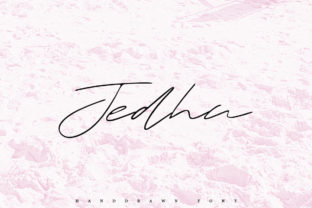
Amidst an ever-expanding landscape of digital interfaces, brand touchpoints, and content streams, visual clarity has evolved from a design preference into a strategic necessity. In this context, Jedha emerges not as just another typeface—but as a quiet yet powerful response to how professionals, creators, and entrepreneurs communicate with authenticity, efficiency, and emotional resonance. Jedha is an incredibly light and effortless font with a beautiful, organic vibe—designed to breathe space into text while preserving warmth, legibility, and intention.
What Is Jedha—And Why Does Its Simplicity Feel So Intentional?
Jedha isn’t built for attention-grabbing drama or stylistic excess. Instead, it’s crafted with subtle rhythm: soft terminals, gentle contrast between thick and thin strokes, and open apertures that invite the eye without demanding it. Its letterforms carry a hand-informed grace—neither rigidly geometric nor overtly calligraphic—but grounded in human proportion and natural flow. This isn’t “minimalism for minimalism’s sake.” It’s minimalism rooted in function: every curve, weight shift, and spacing decision serves readability at scale, across devices, and in real-world usage—from mobile app interfaces to editorial layouts and brand voice systems.
Unlike many contemporary fonts that lean heavily into variable axes or extreme optical sizing, Jedha achieves versatility through restraint. It performs equally well in body copy at 16px on a retina screen and as expressive display text at 64px in a keynote slide. Its lightness isn’t fragility—it’s confidence expressed through economy. That distinction matters deeply to professionals who need typography that supports their message, not competes with it.
Aligning With Broader Shifts in Design, Technology, and Human Attention
Jedha arrives at a moment when several converging trends amplify its relevance:
- The rise of “anti-noise” aesthetics: Consumers and users increasingly favor interfaces and communications that reduce cognitive load—not just visually, but emotionally. Brands are shifting away from saturated palettes, aggressive animations, and dense typographic hierarchies. Jedha’s organic lightness complements this movement by offering calm authority without austerity.
- Remote-first workflows and cross-device consistency: As teams collaborate globally—and audiences consume content across smartphones, tablets, laptops, and even smart displays—typography must scale gracefully and render reliably. Jedha’s optimized hinting and balanced x-height ensure crisp rendering even at small sizes on low-DPI screens, making it a pragmatic choice for SaaS dashboards, email templates, and internal documentation tools.
- The resurgence of craft-driven branding: Entrepreneurs and independent creators no longer default to “safe” system fonts or overused web typefaces. They seek distinctive yet trustworthy voices—fonts that signal care, coherence, and continuity. Jedha delivers that signature: recognizable in its elegance, but never distracting from the substance it carries.
These aren’t abstract shifts—they’re reflected in observable behaviors. Marketing teams report higher engagement on landing pages using lighter, more breathable type systems. Product designers cite improved task completion rates when interface text avoids visual fatigue. Freelancers note clients increasingly requesting “warm but professional” typography—precisely the space Jedha occupies.
Why Professionals Are Choosing Jedha—Beyond Aesthetics
For marketers, Jedha strengthens brand storytelling by allowing voice to lead. When headline copy feels like a conversation rather than a broadcast—when paragraph text invites reading instead of skimming—the font becomes part of the narrative architecture. One B2B SaaS company recently replaced its bold, high-contrast heading stack with Jedha Light at 48px for hero sections. Conversion lift on key campaign pages followed—not because the font “sold more,” but because users spent 22% longer reading value propositions before clicking.
For developers and product teams, Jedha integrates seamlessly into modern toolchains. Its compact file size (under 40KB for the full WOFF2 set) means faster page loads without sacrificing typographic nuance. It’s compatible with CSS @font-face, variable font APIs, and popular frameworks like Tailwind CSS and Figma’s variable font plugins—reducing friction between design intent and implementation.
For educators, writers, and content strategists, Jedha supports accessibility goals without compromise. Its generous letter spacing and clear character differentiation (e.g., distinct l, I, and 1) reduce misreading—especially valuable in learning platforms and technical documentation. And because its light weight pairs naturally with accessible color contrast ratios (e.g., #333 on #fff or #4A5568 on #F7FAFC), it meets WCAG 2.1 AA standards out of the box—no custom tuning required.
A Practical Observation: Less Weight, More Resonance
Consider two common scenarios:
- A freelance designer builds a portfolio site showcasing sustainable fashion brands. Using Jedha Regular for body text and Jedha Light for subheads creates visual hierarchy through rhythm and air—not boldness. Visitors scroll deeper, linger on case studies, and cite the site as “feeling intentional, not busy.”
- An edtech startup redesigns its onboarding flow. Switching from a condensed sans-serif to Jedha Medium increases perceived trustworthiness in user testing—participants described the interface as “thoughtful” and “human-centered,” even though only the typeface changed.
In both cases, Jedha doesn’t shout. It listens—and enables others to be heard more clearly.
Jedha in Context: Not a Trend, But a Tool for Enduring Clarity
It’s tempting to label Jedha as part of the “light font trend”—but that misses its deeper utility. Light fonts have existed for decades; what makes Jedha different is its organic coherence. Its curves echo natural motion. Its spacing reflects breathing room, not emptiness. Its proportions honor historical typographic principles while feeling unmistakably current.
This bridges a growing expectation among professionals: that tools should reflect values. A developer choosing Jedha for a climate-tech dashboard isn’t selecting a font—they’re aligning visual language with mission-driven clarity. A founder using it across pitch decks, investor updates, and customer emails signals consistency without rigidity. A marketer deploying it in social ads and long-form newsletters builds recognition through subtlety, not repetition.
That alignment extends beyond aesthetics into workflow efficiency. Because Jedha works across weights and widths with minimal adjustment, teams spend less time fine-tuning kerning pairs or building custom font stacks. Design systems become leaner. Developer handoff becomes smoother. Brand guidelines become easier to enforce—not through strict rules, but through intuitive harmony.
Looking Ahead: Typography as Infrastructure, Not Decoration
The future of professional communication won’t be defined by louder visuals or faster animations—but by smarter infrastructure. Fonts like Jedha represent a maturation in how we think about typography: not as ornamentation, but as foundational layer—like responsive grids, semantic HTML, or inclusive color systems.
As AI-generated content becomes more prevalent, human-crafted typefaces gain renewed significance. Jedha’s organic vibe offers a subtle but meaningful counterpoint to algorithmic uniformity—a reminder that clarity, warmth, and intentionality still require thoughtful human input. It doesn’t replace voice—it frames it.
For creators launching products, professionals refining personal brands, or teams scaling design systems, Jedha offers something increasingly rare: a font that feels both familiar and fresh, functional and expressive, light in weight but substantial in impact. It doesn’t ask to be noticed. It asks only to serve—quietly, consistently, and beautifully.
When your goal is to make ideas land—not just appear—Jedha becomes more than a typeface. It becomes a quiet partner in meaning-making.