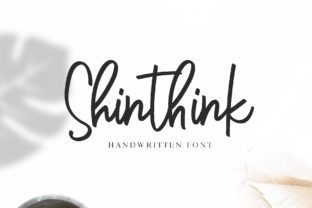
Shinthink: The Handwritten Font That Brings Lightness and Authenticity to Your Creative Work
Whether you're designing a boutique brand identity, crafting an invitation for a heartfelt celebration, or building a warm, approachable website, typography plays a quiet but powerful role in shaping how your audience feels. Shinthink is more than just another handwritten font—it’s a thoughtfully crafted typeface that balances organic charm with modern clarity. With its gentle curves, consistent rhythm, and subtle variation in stroke weight, Shinthink delivers a contemporary handwritten aesthetic without sacrificing readability or versatility. It’s designed not to shout, but to invite—making it ideal for creators who want their work to feel personal, intentional, and effortlessly human.
Why Designers and Marketers Reach for Shinthink
Many professionals face the same recurring challenge: how to communicate warmth and authenticity without falling into cliché or visual clutter. Generic script fonts often feel either overly ornate (hard to read at small sizes) or too casual (undermining credibility). Others lack the nuance needed for real-world use—poor spacing, inconsistent letterforms, or limited language support. These limitations slow down workflows, compromise brand consistency, and dilute emotional impact.
That’s where Shinthink stands out. It was built with practical application in mind—not just as a decorative flourish, but as a functional typographic tool. Its open counters, generous x-height, and carefully tuned kerning ensure legibility across digital and print contexts. And because it avoids extreme contrast or exaggerated flourishes, it scales gracefully—from bold headlines on social media banners to delicate captions in editorial layouts.
Real-World Applications Where Shinthink Makes a Difference
Branding for Small Businesses and Creatives
Local studios, independent makers, wellness practitioners, and boutique retailers often need a voice that feels both trustworthy and tender. Shinthink helps establish that tone instantly. For example, a ceramicist launching her online shop might use Shinthink for her logo and product tags—giving her site a handmade, artisanal sensibility that aligns with her craft. Paired with a clean sans-serif for body text, the result is balanced, memorable, and deeply human.
Digital Marketing & Social Content
In crowded feeds, authenticity cuts through noise. A wellness coach using Shinthink for quote graphics or email headers signals care and individuality—without needing stock imagery or overproduced visuals. Because Shinthink renders well on screens (even at smaller sizes), it performs reliably across devices and platforms—no pixelation, no awkward spacing, no last-minute font swaps.
Printed Materials with Emotional Resonance
From wedding stationery to event programs or artisanal packaging, printed pieces benefit from tactile, expressive typography. Shinthink’s natural flow supports storytelling—whether it's a handwritten note tucked inside a gift box or a custom menu for a seasonal pop-up dinner. Its lightness prevents visual heaviness, letting photography, color, and content breathe.
How Different Users Can Leverage Shinthink Effectively
Designers appreciate Shinthink’s OpenType features—like contextual alternates and ligatures—that add subtle richness without manual tweaking. Use them selectively to enhance rhythm in longer headlines or quotes. For UI design, consider Shinthink only for high-impact, short-label scenarios (e.g., “Subscribe,” “Join Us,” or “Thank You”)—never for navigation or dense interface text.
Marketers and Content Creators benefit most when they treat Shinthink as an accent—not the anchor. Start with a strong, accessible system font for all body copy and functional text, then introduce Shinthink only where personality matters most: hero section headlines, CTA buttons, testimonial highlights, or branded newsletter signatures. This approach keeps messaging clear while adding signature warmth.
Non-Designers (Entrepreneurs, Educators, Event Planners) will find Shinthink refreshingly intuitive. No need for advanced software knowledge: it works seamlessly in Canva, Google Slides, Adobe Express, and most modern design tools. Try pairing it with free, web-safe fonts like Inter or Lato for immediate, professional-looking results—even if you’re building your first landing page or classroom handout.
Practical Tips for Getting the Most From Shinthink
- Pair wisely: Shinthink shines brightest alongside neutral, well-proportioned sans-serifs (e.g., Montserrat, Poppins, or Nunito). Avoid competing scripts or overly decorative companions—they’ll muddy the message.
- Respect hierarchy: Use Shinthink at larger sizes (24px and up) for maximum impact. At smaller sizes, switch to a highly legible secondary font to maintain clarity.
- Test contrast: While Shinthink has excellent readability, always verify color contrast against your background—especially for accessibility compliance (WCAG AA minimum).
- Consider licensing: Ensure your intended use (web, desktop, app, or merchandise) is covered by the license you choose. Many creators overlook this until launch—and avoidable delays are never worth the risk.
- Think beyond English: Shinthink supports Latin-based languages including accented characters used in French, Spanish, Portuguese, German, and more—making it a smart choice for bilingual or globally minded projects.
What Shinthink Offers Beyond Aesthetics
At its core, Shinthink is about intentionality. In a world saturated with AI-generated content and algorithm-driven visuals, choosing a font like Shinthink is a quiet act of human-centered design. It signals that you value connection over convenience, clarity over complexity, and authenticity over automation.
It also saves time—not just in execution, but in decision fatigue. When you have a go-to handwritten font that works reliably across contexts, you spend less time searching, testing, and second-guessing. That means more energy for strategy, storytelling, and meaningful user engagement.
Ultimately, Shinthink doesn’t promise to solve every design challenge—but it does make many common ones easier, lighter, and more joyful to tackle. Whether you're refining your brand voice, launching a passion project, or simply trying to make everyday communications feel more like a conversation, Shinthink offers a graceful, grounded way forward.
If you’ve been looking for a handwritten font that feels current—not nostalgic—and supportive—not demanding—Shinthink is worth your attention. It’s not just a typeface. It’s a thoughtful tool for people who believe great design begins with empathy, clarity, and care.