Santai Script
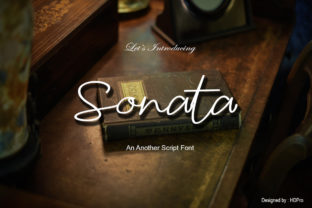
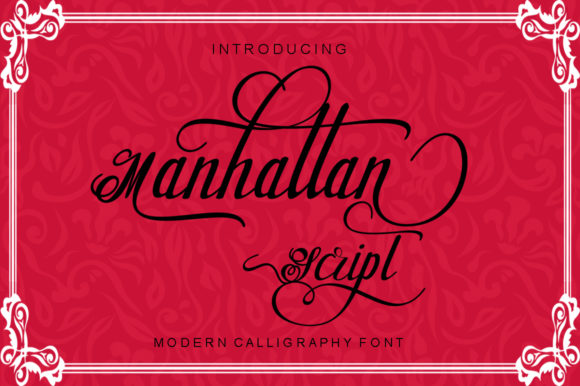
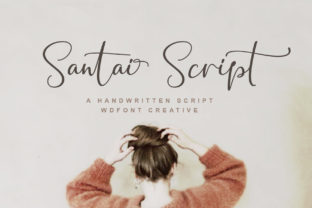
Santai Script is a light, modern handwritten font designed to convey elegance without formality. It features subtle contrast, gentle curves, and consistent spacing—characteristics that support readability while preserving a personal, human touch. Unlike calligraphic or highly decorative scripts, Santai Script avoids excessive flourishes, making it more versatile for contemporary digital and print applications.
Why Consider Santai Script?
Designers and communicators often seek typefaces that balance personality with functionality. Santai Script appeals to those looking for a handwritten aesthetic that feels current—not nostalgic or overly casual. Its light weight and open letterforms make it suitable for contexts where softness and approachability matter: brand identities for wellness services, editorial accents in lifestyle publications, or refined packaging for artisanal products.
It’s also a practical choice when consistency across platforms is important. Santai Script includes standard Latin characters, numerals, and basic punctuation, and performs well at medium to large sizes on both screen and paper. That makes it easier to integrate than many niche script fonts that lack full character sets or robust hinting for web use.
Key Benefits
- Modern readability: The even rhythm and moderate x-height help maintain legibility in headings and short blocks of text—even at smaller sizes on high-resolution displays.
- Design flexibility: Its restrained style allows pairing with a wide range of sans-serif and serif companions (e.g., Inter, Lora, or Manrope) without visual competition.
- Lightweight presence: At its intended usage—headings, logos, quotes, or labels—it adds distinction without dominating layout hierarchy.
- Cross-format compatibility: Available in OpenType format with web-friendly variants, supporting CSS font loading strategies and variable font options where applicable.
Tradeoffs and Realistic Expectations
Santai Script is not optimized for long-form body text. Its connected, flowing structure reduces scanning efficiency in paragraphs, especially at smaller sizes or on low-contrast backgrounds. Readers may experience fatigue if used beyond brief emphasis—such as pull quotes, section titles, or call-to-action buttons.
Additionally, while the font supports multilingual Latin-based languages (including accented characters for French, Spanish, and German), it does not include extended Cyrillic, Greek, or Asian language coverage. Projects requiring broad linguistic support will need supplemental typefaces or fallbacks.
Its light weight also means it requires careful attention to color contrast. On light backgrounds, dark gray or black works reliably; on dark backgrounds, pure white or near-white is preferable. Avoid mid-tone grays or low-saturation colors unless tested for WCAG AA compliance.
When Santai Script Is a Strong Fit
Santai Script excels in scenarios where tone and subtlety are priorities. Consider it for:
- Branding projects emphasizing calm, craftsmanship, or mindfulness—such as yoga studios, herbal apothecaries, or sustainable fashion labels.
- Digital interfaces where visual hierarchy relies on typographic contrast: dashboard headers, newsletter subject lines, or landing page subheads paired with neutral sans-serifs.
- Print collateral like wedding invitations, boutique product tags, or limited-run zines—where tactile quality and intentional typography reinforce message intent.
- Projects with modest typographic palettes (two fonts max), where Santai Script serves as the sole expressive element alongside a highly functional companion.
When Alternatives May Be More Appropriate
If your project demands high legibility at small sizes—such as UI labels, data tables, or footnotes—Santai Script is unlikely to meet functional requirements. In those cases, a carefully chosen geometric or neo-grotesque sans-serif (e.g., IBM Plex Sans, Work Sans, or Public Sans) offers better performance.
For branding that leans into heritage, tradition, or authority, a more structured script—like Playfair Display Italic or Great Vibes—may communicate gravitas more effectively, though with less contemporary neutrality.
If your workflow involves frequent internationalization or dynamic content generation (e.g., user-generated names or translated snippets), verify that Santai Script covers all required glyphs. If gaps exist, evaluate alternatives with broader Unicode support—such as Quicksand (for friendly sans-serif) or Archivo Black (for strong, readable display use).
Making a Practical Decision
Evaluating Santai Script isn’t about whether it’s “good”—it’s about whether it serves your specific constraints and goals. Start by clarifying three things:
- Usage context: Where and how will the font appear? Prioritize real implementation scenarios over isolated mockups.
- Audience needs: Does your audience benefit from warmth and informality—or require clarity, speed, or familiarity above stylistic distinction?
- Technical boundaries: What platforms, languages, and accessibility standards apply? Test rendering on target devices and validate contrast ratios before finalizing.
Try setting actual content—not placeholder text—in your intended layout. Compare how Santai Script performs beside your primary body font at multiple sizes and weights. Note where it enhances meaning and where it introduces ambiguity or effort.
Also consider licensing. Santai Script is available under standard desktop, web, and app licenses—but usage rights vary by vendor. Confirm permissions for your distribution method (e.g., SaaS dashboards or embedded PDFs) before committing to it in production.
Final Considerations
Santai Script reflects a deliberate design philosophy: handwritten authenticity, stripped of excess. That makes it valuable in contexts where restraint communicates intention. But like any specialized tool, its value emerges only when matched thoughtfully to purpose—not trend.
If your goal is to signal quiet confidence rather than exuberance, to suggest care without ornamentation, or to unify visual tone across touchpoints with minimal typographic elements—Santai Script warrants close evaluation. If instead you prioritize universal legibility, broad language support, or dense information delivery, allocate time to explore alternatives with different structural priorities.
Ultimately, the strongest typography decisions arise not from preference alone, but from alignment between voice, function, and audience need. Santai Script offers one clear path toward that alignment—provided its strengths and limits are understood upfront.