Kiddo: Whimsy You Can Trust
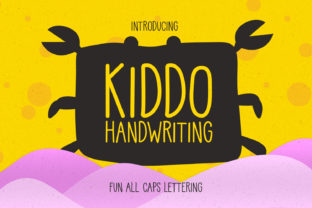
If you’ve ever stared at a design and thought, “It’s clean—but where’s the joy?”, Kiddo is your quiet answer. It’s not another over-polished script or a sterile sans serif pretending to be friendly. Kiddo is a premium font built around authenticity: bold, slightly uneven strokes, joyful inconsistencies, and that unmistakable hand-drawn energy—like something sketched by a clever 10-year-old who’s already got serious style instincts.
Visually, Kiddo sits firmly in the handwritten font category—but it’s far from messy. Its letters have generous spacing, confident weight shifts, and subtle bounce in the ascenders and descenders. There’s no forced “cuteness”; instead, there’s warmth, spontaneity, and approachability. The lowercase ‘g’ has a playful loop, the ‘a’ opens wide and welcoming, and the capital ‘K’ leans just enough to feel alive—not rigid. It’s a display font first and foremost, meaning it shines at larger sizes: headlines, posters, packaging, social banners. But unlike many whimsical fonts, Kiddo holds up surprisingly well at 24–36pt in editorial layouts or email headers—especially when paired with a clear, neutral companion.
Where Kiddo Actually Fits—Without Forcing It
Kiddo isn’t for body text. And it’s not ideal for legal disclaimers or dense product specs. But in the right places? It transforms perception instantly. Think of it as your brand’s smile—used with intention, not sprinkled everywhere.
- Branding & logo design: Kiddo works beautifully in logotypes for children’s services (not just toys—think pediatric clinics, tutoring studios, or family wellness brands), indie bakeries, craft supply shops, and creative studios that want to signal warmth over formality.
- Packaging design: On jam jars, greeting cards, or handmade soap labels, Kiddo adds tactile charm without sacrificing legibility at shelf level. Its rhythm invites pause—and purchase.
- Social media graphics: A Kiddo headline over a soft photo background stops scrollers. Try it on Instagram carousels for “5 Tips for First-Time Gardeners” or Pinterest pins for DIY party ideas—it signals friendliness and accessibility, not corporate distance.
- Editorial design: In newsletters or digital magazines focused on parenting, education, or creative living, Kiddo makes section headers feel personal, not performative. One designer told us she uses it only for “the moment the reader exhales”—like the intro line before a heartfelt story.
- Print collateral: Wedding invitations, workshop handouts, or local event posters gain sincerity with Kiddo. It doesn’t shout; it leans in.
What Kiddo Does to Your Audience—And Your Brand
Typography isn’t decoration. It’s shorthand. Kiddo tells people, “This isn’t cold. This isn’t generic. You’re safe here.” That matters—especially for small business owners competing with faceless algorithms and polished competitors. When a parent sees Kiddo on a homeschool curriculum site, they register care and human scale before reading a word. When a crafter sees it on a pattern download, they sense playfulness and permission to experiment.
That said, Kiddo also asks for consistency. Use it once on a homepage banner and never again? It confuses hierarchy and dilutes recognition. Better to use it tightly: consistently for H1s across your site, or exclusively in your email subject lines and hero graphics. Paired with a warm, open sans serif like Poppins or a gentle serif like Merriweather, Kiddo gains contrast and clarity—without losing its voice.
Readability isn’t about perfection—it’s about flow and familiarity. Kiddo’s letterforms are distinct enough that readers don’t stumble, but its personality means it needs breathing room. Avoid tight tracking, small sizes, or low-contrast color combos (e.g., light gray on white). Test it on mobile: does the ‘y’ tail still read clearly at 28px? Does the ‘b’ stand apart from the ‘h’? Real-world testing beats theoretical rules every time.
Choosing Kiddo—Practically, Not Poetically
Before licensing Kiddo, ask three things:
- Is this a display moment—or a functional one? If you need to set paragraphs, captions, or navigation menus, Kiddo isn’t the tool. Save it for where tone matters most.
- What styles are included? Most quality handwritten fonts ship with at least Regular and Bold. Some include stylistic alternates (swashes, flourishes) or even a lighter weight for subtlety. Check if Kiddo offers OpenType features like contextual ligatures—these can add polish without manual tweaking.
- Is commercial use covered? Kiddo is a commercial font, but verify the license covers your use case: client work, SaaS dashboards, print-on-demand products, or embedded web use. Reputable foundries spell this out clearly—not buried in legalese.
Don’t skip pairing tests. Drop Kiddo into a real layout—not a mockup—and compare it beside two options: one neutral (like Inter or Lato), and one with gentle contrast (like Playfair Display or Cormorant Garamond). Does Kiddo feel anchored—or adrift? Does the combination guide the eye, or fight for attention? One publisher found Kiddo + Montserrat worked best for her seasonal newsletter because Montserrat’s clean geometry gave Kiddo room to breathe while keeping the whole thing grounded.
A Note on Longevity—and When to Step Back
Kiddo isn’t trendy. It’s timeless in the way handmade things are: rooted in human gesture, not algorithmic trends. That’s why it ages well—unlike fonts designed solely to chase “viral” aesthetics. But even timeless tools need restraint. Overuse flattens impact. A brand that slaps Kiddo on every CTA button, testimonial quote, and footer link loses its magic—and starts feeling chaotic, not charming.
Think of Kiddo as a strong supporting actor—not the lead in every scene. Let it introduce your brand’s voice, then let other typefaces carry the narrative forward. Used this way, it builds recognition without shouting. It feels intentional, not incidental. And for creators balancing professionalism with personality, that balance isn’t just nice—it’s necessary.