Colleen Philadelphia
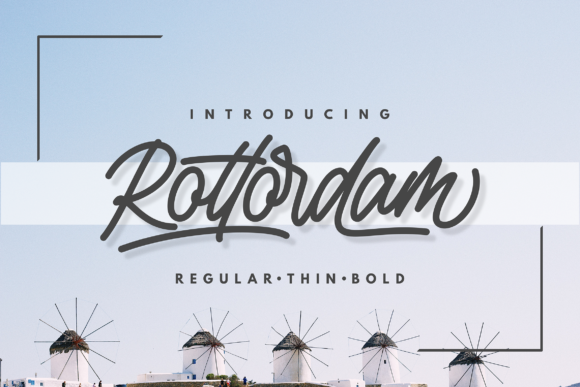
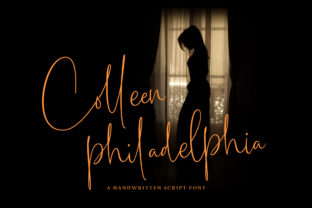
Colleen Philadelphia isn’t just another handwritten font—it’s a quiet moment of intention captured in ink. Designed with the subtle irregularities of real pen-on-paper movement, it balances warmth and polish in a way few modern script fonts achieve. The letterforms have gentle tapering strokes, soft entry and exit flourishes, and a relaxed but deliberate rhythm—never stiff, never chaotic. There’s no forced “quirkiness” here; instead, you’ll notice how the lowercase a, g, and y carry a grounded, slightly rounded personality, while capitals like C and S curve with confident ease. It reads as both personal and professional—like a thoughtful note from someone who knows their craft.
Where Colleen Philadelphia Feels Most at Home
This is a display font first and foremost—not meant for long paragraphs or body text—but where it shines is unmistakable: anywhere authenticity needs to be felt, not just stated. Think wedding stationery where couples want elegance without formality, small-batch product labels that reward close inspection, or boutique brand identities built on trust and care. We’ve seen Colleen Philadelphia used effectively in editorial design for lifestyle magazine pull quotes, on ceramic studio packaging that leans into tactile storytelling, and even as a subtle accent in web design headers—paired with a clean sans serif to anchor the layout.
It works especially well when your audience values craft, attention to detail, or human-centered values. A sustainable skincare brand might use Colleen Philadelphia for its “Ingredients Sourced With Care” tagline—not because it’s decorative, but because the font quietly reinforces what the words say. Similarly, independent publishers choosing Colleen Philadelphia for book cover titles often report stronger emotional resonance with readers browsing online thumbnails. That’s not accidental—it’s the result of intentional spacing, balanced weight distribution, and a rhythm that invites pause.
What It Does for Your Brand (and What It Doesn’t)
Colleen Philadelphia strengthens brand perception by adding warmth without sacrificing clarity. Unlike some script fonts that sacrifice legibility for flair, it maintains strong character distinction—even at smaller sizes (18–24px) in high-resolution contexts. That makes it viable for social media graphics where space is tight but tone matters: an Instagram carousel slide highlighting a founder’s story, or a Pinterest pin for a handmade goods shop. Its natural flow supports visual hierarchy when used sparingly: a headline in Colleen Philadelphia paired with a neutral sans serif body font creates instant contrast and focus.
That said, it won’t solve foundational branding issues. If your logo needs to scale from billboard to business card, Colleen Philadelphia alone may lack the structural versatility of a custom-drawn logotype. And while it’s expressive, it’s not inherently playful or youthful—it leans more toward thoughtful maturity than whimsy. So if your audience skews Gen Z and expects kinetic energy or digital-native edge, this font may feel too grounded. That’s not a flaw—it’s specificity. Knowing where it fits—and where it doesn’t—is part of using it well.
Practical Tips Before You Use It
- Evaluate project fit first: Ask yourself whether the message benefits from a handwritten voice. Is “handmade,” “curated,” “thoughtful,” or “personal” part of your core value proposition? If yes, Colleen Philadelphia likely supports that. If your goal is speed, efficiency, or technical authority, consider pairing it only as an accent—not the lead.
- Test pairings early: It pairs beautifully with warm, open sans serifs like Inter, Manrope, or Work Sans, especially in medium or regular weights. Avoid overly geometric or ultra-thin companions—they can clash with Colleen Philadelphia’s organic cadence. Try setting a headline in Colleen Philadelphia at 36px and body copy at 16px in a neutral sans serif. Adjust tracking slightly (+20–40) on the script to prevent crowding.
- Review included styles: Colleen Philadelphia typically ships with one primary weight (regular) and sometimes includes alternate characters or ligatures. Check whether your license includes OpenType features—these can unlock contextual alternates that improve word shapes (e.g., “the” or “and” flowing more naturally). Don’t assume stylistic sets are enabled by default in all design apps.
- Readability in context matters most: Test it on the devices and surfaces your audience will actually see it on—especially mobile screens. Rendering varies across browsers and operating systems. What looks smooth in Figma may appear slightly jagged in Safari on older iOS versions. When in doubt, preview at 100% zoom on a real device.
- Licensing is non-negotiable: Colleen Philadelphia is a premium font, and commercial use requires a proper license. This covers websites (with @font-face embedding), digital ads, printed collateral, and merchandise. If you’re designing for a client, confirm whether their license extends to your usage—or whether you need to purchase separately. Free “download” sites often distribute unlicensed copies with missing glyphs or compromised quality. Support the designer; it ensures future updates and ethical access.
A Font That Earns Its Space
Using Colleen Philadelphia well isn’t about applying it everywhere—it’s about knowing when a human touch deepens meaning. We’ve watched designers step back from overusing script fonts altogether, then rediscover Colleen Philadelphia for precisely the moments where warmth changes everything: a thank-you email header that feels handwritten, a podcast episode title that stands out in a crowded feed, or a limited-edition print release where typography becomes part of the collectible experience.
Its strength lies in restraint. One line, well-placed, in Colleen Philadelphia can do more than three lines in a generic script. It doesn’t shout. It leans in. And in a world saturated with algorithm-driven visuals, that kind of quiet confidence is rare—and increasingly valuable.