Aliandra: A Graceful Calligraphy Font
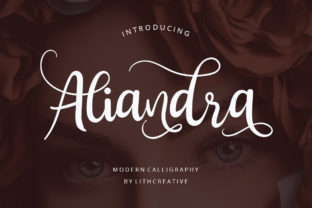
Aliandra isn’t just another script font—it’s a carefully crafted calligraphy typeface with rhythm, warmth, and quiet confidence. Its flowing strokes, subtle contrast, and intentional imperfections give it a hand-drawn authenticity that feels personal without sacrificing clarity. Whether you’re designing a wedding invitation, branding a small-batch skincare line, or crafting a thoughtful blog header, Aliandra brings grace—not grandeur—into your work.
What Makes Aliandra Stand Out
Unlike many decorative scripts that prioritize flair over function, Aliandra balances expressiveness with readability. Its lowercase letters feature soft entry and exit strokes, while capitals carry gentle swashes—not overwhelming, but unmistakably intentional. The spacing is generous, the x-height generous enough for body text at larger sizes, and the overall rhythm encourages slow, considered reading.
It’s not “vintage” or “modern” in a strict sense—Aliandra occupies a grounded middle ground. That makes it adaptable: pair it with a clean sans-serif like Inter or Lato for contrast, or layer it with a warm serif like Cormorant Garamond for rich editorial depth. It works because it doesn’t shout; it invites attention through sincerity.
Creative Uses Across Real Projects
Designers and creators use Aliandra where tone matters as much as typography. Here’s how it translates across real-world contexts:
- Small business branding: A ceramicist in Portland uses Aliandra for her logo and packaging labels—paired with uncoated paper and muted earth tones—to reinforce craftsmanship and care.
- Digital content: A wellness coach applies Aliandra to Instagram quote graphics (at 48–60px), always against ample negative space and soft gradients—never busy backgrounds—so the message stays legible on mobile.
- Educational materials: An educator designing printable reflection journals chooses Aliandra for section headers and prompts. Its gentle curves reduce visual stress, helping learners focus on content—not font acrobatics.
- Printed stationery: Freelance writers order custom letterpress notecards with Aliandra for return addresses and short salutations—its ink spread on cotton paper enhances its organic texture.
How Different Users Can Adapt Aliandra Thoughtfully
Aliandra responds well to intention—not just application. How you use it depends on who you’re speaking to, and where:
For marketers and entrepreneurs
Use Aliandra selectively: in logos, hero headlines, or email subject lines—not full product descriptions. Test it across devices. On mobile, keep line length under 45 characters when using it large. Avoid all-caps settings unless manually adjusted for spacing—its natural flow weakens when flattened.
For educators and creators of learning tools
Leverage Aliandra’s approachability in welcome messages, course module titles, or reflective prompts. Skip using it for instructions or data-heavy tables. Instead, let it frame moments of pause—like a “Take a breath before continuing” note at the start of a guided exercise.
For bloggers and content creators
Apply Aliandra to featured quote blocks or chapter dividers—not body copy. Export as SVG for web use to retain crisp edges at any scale. If embedding via CSS, load it as a variable font (if available) to reduce file size and allow subtle weight shifts for emphasis.
Keeping Your Work Clear and Audience-Friendly
Graceful doesn’t mean vague. Aliandra shines when paired with clear hierarchy and purpose. Ask yourself before applying it:
- Is this the first thing I want people to notice—or is it supporting something more important?
- Does the background color or image compete with its fine strokes? (Hint: if you can’t trace the shape of the ‘a’ or ‘g’ easily, simplify the backdrop.)
- Will someone scanning on a phone still grasp the core idea in under three seconds?
Consistency matters more than variety. If you use Aliandra for headings, stick with one weight and one size range across your site or brand system. Introduce variation through layout, spacing, or complementary fonts—not by swapping between multiple script styles.
Ideas to Try This Week
You don’t need a big project to explore Aliandra meaningfully. Try these low-lift, high-impact experiments:
- Redesign one email newsletter header using Aliandra + a single accent color—no images, no extra fonts.
- Create a printable habit tracker where only the day-of-week labels are in Aliandra—the rest stays neutral and functional.
- Sketch three versions of your personal or business tagline: one in Aliandra alone, one with a minimal icon beside it, and one where only the first word uses Aliandra—then test which feels most aligned with your voice.
- Use Aliandra in a Canva social post—but export as PNG with transparent background, then overlay on a real photo (not stock) taken with your phone. The contrast between human texture and refined lettering creates instant warmth.
A Word on Originality and Restraint
Using Aliandra doesn’t make your work unique—how you use it does. A café owner in Nashville uses it only on their chalkboard menu specials, never digitally. A poet sets manuscript title pages in Aliandra, then prints them on recycled paper with visible deckle edges. Neither is “using a font”—they’re extending a feeling into physical form.
That’s the quiet power of Aliandra: it supports intention, not replaces it. It won’t fix weak messaging or unclear goals—but in the hands of someone who knows what they want to say and who they’re saying it to, it helps those words land with more weight, warmth, and presence.
If you’ve been holding back from trying a script font because past ones felt too ornate or hard to control, Aliandra is worth revisiting—not as a trend, but as a tool calibrated for clarity, calm, and craft.