Guys: A Soft Handwritten Font for Dreamy Design
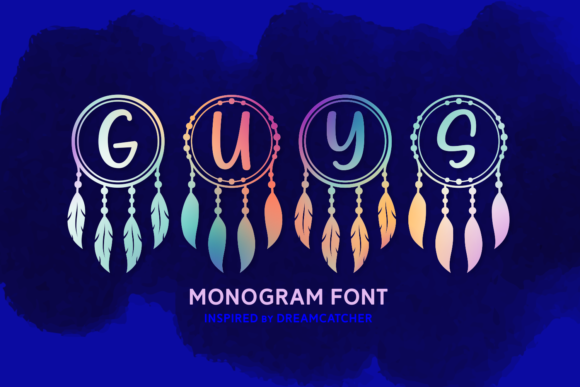
There’s a quiet magic in handwriting that feels personal, unhurried, and deeply human—especially when it’s rendered with the gentle flow of Guys. This isn’t a font that shouts. It whispers. With its soft curves, subtle inconsistencies, and dream-catcher-like delicacy, Guys invites warmth into digital spaces often dominated by sharp edges and rigid geometry. It’s not just “handwritten”—it’s handwritten with intention, breath, and care.
What Makes Guys Stand Out (Beyond the Aesthetic)
Guys is built on authenticity—not perfection. Its lowercase letters tilt slightly, its strokes vary in weight, and its terminals taper like ink drying on paper. These aren’t flaws; they’re features that signal humanity to the viewer. Unlike many script fonts that rely on exaggerated flourishes or forced elegance, Guys stays grounded. Its x-height is generous, spacing is open, and legibility remains strong—even at smaller sizes or in longer body text.
That balance—between personality and practicality—is why designers, educators, and small business owners reach for Guys when they need something expressive *and* trustworthy. It works where other handwritten fonts falter: in email headers, workshop handouts, product packaging labels, and even short-form social captions. It doesn’t compete with your message—it supports it, softly.
Creative Uses That Feel Real, Not Forced
You don’t need a grand branding overhaul to begin using Guys meaningfully. Start small, stay intentional:
- Product storytelling: A ceramicist uses Guys for short origin notes on her online shop (“Hand-thrown in Portland, fired at dawn”). The font mirrors the tactile, slow-made quality of her work—no extra copy needed.
- Educational materials: An ESL teacher applies Guys to vocabulary flashcards for beginner learners. Its clear letterforms reduce visual noise while still feeling inviting—not cold or clinical like a sans-serif might.
- Local business signage: A neighborhood florist prints a seasonal menu board using Guys for the flower names (“Lavender • Sweet Pea • Dried Eucalyptus”) alongside clean sans-serif prices. The contrast feels curated, not cluttered.
- Digital newsletters: A freelance writer opens her weekly email with a one-line quote in Guys—just enough to pause the scroll, set tone, and reinforce voice before diving into prose set in a readable serif.
Notice how none of these examples treat Guys as decoration. It’s always serving a purpose: guiding attention, reinforcing values, or softening tone without sacrificing clarity.
How Different Creators Can Adapt Guys Thoughtfully
Designers often use Guys as a secondary typeface—not the hero, but the harmonizer. Pair it with a neutral, highly legible sans-serif (like Inter or Poppins) for headings + body, then let Guys handle quotes, pull-outs, or CTA buttons. Avoid stacking multiple script fonts; Guys shines brightest when given breathing room.
Bloggers and content creators benefit from its approachability. Try using Guys only for article subheadings or section dividers—small moments of visual rhythm that help readers navigate long-form posts without fatigue. Just ensure contrast is sufficient (e.g., dark gray on off-white, never light gray on white).
Small business owners appreciate how Guys conveys care without requiring design expertise. Use it consistently across three touchpoints: your website banner tagline, printed thank-you cards, and Instagram story highlights. Consistency here builds recognition—not because people memorize the font, but because they remember how your brand *feels*.
Educators and workshop facilitators find Guys especially useful for handouts, slide titles, or reflection prompts. Its organic shape subtly signals “this is for thinking, not testing.” One Montessori educator uses Guys exclusively for student-facing instructions (“Draw what grows underground” vs. “Complete worksheet 3B”), finding it lowers resistance and increases engagement.
Staying Clear, Consistent, and Audience-Friendly
Handwritten fonts can easily tip into illegibility or visual noise if overused. With Guys, restraint is part of the strategy. Here’s how to keep it effective:
- Limit usage to two weights max—typically Regular and Bold. Avoid Light or Italic variants unless you’ve tested them thoroughly in your context.
- Respect hierarchy: Never use Guys for dense paragraphs or data tables. Reserve it for short, high-impact text—under 20 words per instance.
- Test contrast and size: At 16px on screen, Guys reads well for headings—but drops below 14px, detail blurs. Print at 10pt minimum for body applications like greeting cards.
- Stay platform-aware: Guys renders beautifully on modern browsers and most design tools (Figma, Adobe Suite), but avoid embedding it in PDFs meant for wide distribution unless you outline text or embed the font properly.
And remember: originality comes not from novelty, but from thoughtful application. You don’t need to reinvent Guys—you need to understand what it communicates (calm, craft, sincerity) and match that to what your audience needs in that moment.
Where to Begin—Without Overthinking
If you’re drawn to Guys but unsure where to start, try this 15-minute experiment:
- Open a blank document.
- Type three short phrases that reflect your current project or brand voice—e.g., “Made with care,” “Learn at your pace,” “Fresh every morning.”
- Set them in Guys at 24–36px. Then step back. Does it feel aligned? Too delicate? Too informal?
- Now add one supporting element—a simple line, a muted color block, or a single photo—and see how Guys interacts with it.
This isn’t about final output. It’s about building intuition. Fonts are tools, not talismans—and Guys is one that rewards patience, clarity, and real-world testing over trend-chasing.
When used with purpose—not just prettiness—Guys becomes more than a typeface. It becomes a quiet collaborator in how people experience your ideas, products, or presence. It doesn’t demand attention. It earns it, gently.